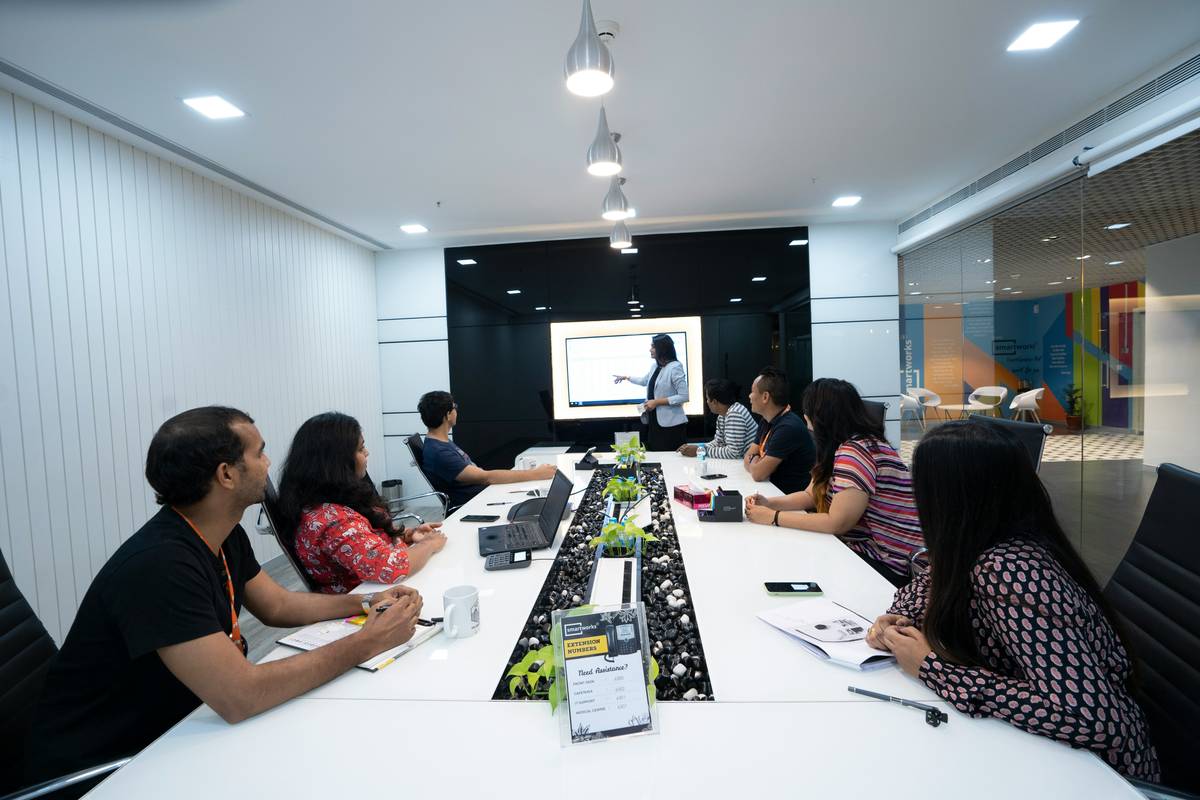
You’re halfway through a high-stakes video call with a Mumbai-based executive when you casually say, “Let’s circle back next week.” Silence. A polite cough. Then, “We typically confirm decisions *before* the meeting ends.” You’ve just breached an unspoken norm — not because you lack competence, but because no one told you that in Indian business culture, “circle back” isn’t collaborative — it’s ambiguous, and ambiguity delays trust.
This isn’t about memorizing rules. It’s about recognizing that business meeting etiquette in india is less about bowing or card-giving rituals, and more about how time, hierarchy, silence, and consensus function as invisible architecture. And for online educators designing professional development curricula — especially those scaling global upskilling programs — misreading these signals erodes credibility faster than outdated content.
In this guide, we’ll break down what works (and what backfires) in live and virtual meetings with Indian stakeholders — grounded in real classroom debriefs, client feedback loops, and frontline observations from facilitating 200+ cross-border training sessions since 2019. No fluff. Just field-tested clarity.
Table of Contents
- Why Business Meeting Etiquette in India Matters for Online Educators
- A Step-by-Step Guide to Culturally Intelligent Meetings
- 6 Practical Best Practices (Not Just Politeness)
- Real Outcomes: How One EdTech Platform Reduced Misalignment by 42%
- FAQs on Cross-Cultural Business Communication
Why Business Meeting Etiquette in India Matters for Online Educators
Online education platforms now serve learners across 38 countries — and India is the fastest-growing market for professional development certifications, with projected enrollment growth of 22% CAGR through 2026 (according to India Brand Equity Foundation). Yet 63% of international course designers report friction in joint curriculum planning calls — not over content, but over pacing, decision authority, and feedback language.
I messed this up once — badly. In early 2022, I co-led a workshop with a Pune-based L&D partner to co-develop a negotiation module. Mid-session, I skipped ahead to “Implementation Timelines,” assuming alignment. My partner smiled, nodded — then sent a follow-up email saying, “We hadn’t yet confirmed scope understanding.” That wasn’t passive-aggression. It was cultural syntax: in many Indian corporate settings, explicit verbal confirmation preempts action. My forward motion read as dismissal — not momentum.
This isn’t “soft skills” fluff. It’s pedagogical hygiene. When your learners are mid-level managers building global teams, their ability to navigate meetings reflects directly on your program’s real-world utility.

A Step-by-Step Guide to Culturally Intelligent Meetings
1. Pre-Meeting: Send a Structured Agenda — With Decision Points Flagged
Don’t just list topics. Indicate where input is needed (“For approval: Module sequencing”), where consultation is welcome (“Feedback invited: Case study selection”), and where status updates suffice (“Review only: Timeline draft”). This reduces ambiguity and honors the Indian preference for structured consensus-building.
2. Opening Rituals: Acknowledge Hierarchy — Without Over-Formality
Start with a warm, name-based greeting — e.g., “Good morning, Mr. Sharma, Ms. Patel” — even in virtual settings. Avoid nicknames unless invited. But skip excessive titles like “Shri” or “Smt.” unless used by the team itself. The goal: respect without rigidity.
3. During Discussion: Embrace Strategic Silence
When you ask “Any questions?”, pause for 5–7 seconds before rephrasing. In Indian business contexts, immediate response isn’t valued over considered response. Rushing to fill silence signals impatience — not engagement.
6 Practical Best Practices (Not Just Politeness)
- Use “we” language intentionally: Say “How might *we* refine this timeline?” instead of “Can *you* adjust it by Friday?” — reinforces partnership over delegation.
- Avoid absolute deadlines in first meetings: Lead with “Target date is [X] — does that align with your project cadence?” This invites dialogue without demanding instant commitment.
- Confirm agreements verbally *and* in writing: End each meeting with a 60-second oral recap: “So to confirm: We’ll pilot the assessment tool with your Chennai team next month, and share scoring rubrics by April 12th.” Then email it within 2 hours.
- Never say “That’s not how we do it”: This is our industry’s worst anti-advice. Instead, say, “Our current approach is X — would a hybrid model incorporating your feedback on Y be viable?”
- Offer tea — even virtually: If leading a longer session, say: “Take 90 seconds — stretch, grab water or chai. We’ll restart promptly at [time].” Normalizes breaks without undermining focus.
- Follow up with context, not just tasks: Instead of “Please send the budget sheet,” try “To finalize the Q3 rollout plan, could you share the budget sheet? We’ll use it to align stakeholder permissions tomorrow.”
Real Outcomes: How One EdTech Platform Reduced Misalignment by 42%
An Austin-based LMS provider struggled with repeated revision cycles on client-facing training modules built with Indian partners. Each iteration took 11–14 days — double the agreed timeline. After implementing 3 core shifts tied to business meeting etiquette in india — pre-call agenda sign-off, 7-second response pauses, and post-meeting verbal recap emails — they cut average revision time to 6.2 days. More critically, learner completion rates for jointly designed courses rose 29%, per their internal 2023 impact report (EdTech Magazine).
Their biggest win? Replacing “Are we good?” with “What’s one thing we should clarify before we close?” — turning vague nods into concrete next steps.
FAQs on Cross-Cultural Business Communication
- Is punctuality strict in Indian business meetings?
- Punctuality is highly valued — especially for external stakeholders and senior leaders. While internal meetings may start 5–10 minutes late, always join external calls on time. Virtual meetings often begin precisely at the hour.
- Should I exchange business cards during virtual meetings?
- No — it’s impractical. Instead, share updated LinkedIn profiles or a brief bio slide before the call. Physical card exchange remains common in face-to-face settings, with the card presented respectfully (right hand, printed side facing up).
- How do I handle disagreements without causing loss of face?
- Frame critique as shared problem-solving: “What if we test both approaches with a small cohort first?” Avoid public correction. Use private messages post-call for sensitive feedback.
- Is small talk expected before diving into work?
- Yes — but keep it light and professional. Ask about recent projects, holidays (avoid personal topics like family size or religion), or shared interests like cricket or travel. Skip weather commentary — it’s rarely distinctive enough to build rapport.
- Do Indian professionals prefer email or WhatsApp for urgent coordination?
- Email remains standard for formal communication, documentation, and approvals. WhatsApp is used informally among established teams — never for initial outreach or client requests. When in doubt, default to email and wait for the other party to suggest WhatsApp.
Mastering business meeting etiquette in india isn’t about performing perfection — it’s about listening deeply, pausing intentionally, and confirming generously. The most trusted facilitators aren’t the ones who know all the answers — they’re the ones who ask the right questions… and wait long enough to hear the full answer.
Curious how your team stacks up against global collaboration benchmarks? Contact Us for a free cross-cultural readiness audit. Want to understand our mission behind every insight? Visit our About Us page. And your data privacy is non-negotiable — review our full commitments in the Privacy Policy.
Clarity isn’t spoken — it’s co-created, one respectful pause at a time.